
Reading Graves County Property Tax Records
A Graves County tax question really spans three offices. The Property Valuation Administrator's qPublic system supplies the assessment card, which identifies the parcel, its class, tax district, owner and valuation fields. The Graves County Sheriff collects the current annual bill. The County Clerk's delinquent-tax records take over next. Once an unpaid bill transfers after April 15, the Clerk becomes the correct source for that account.
| Tax-record field | Meaning | Official keeper |
|---|---|---|
| Working and certified value | Separate PVA values; the certified figure belongs to the tax roll | Graves PVA |
| Class and tax district | Classification and jurisdictions used in taxation | Graves PVA |
| Current bill and payment stage | Amount billed, payment timing and current collection status | Graves Sheriff |
| Exemption | Parcel-specific relief that affects taxable consequences | Graves PVA |
| Certificate of delinquency | A transferred unpaid tax claim; not an automatic deed | Graves County Clerk |
A tax record is not a price forecast. Kentucky assesses real property at estimated fair cash value. Still, an arm's-length sale, a private appraisal and the PVA roll are different evidence built for different purposes.
January 1 Starts the Graves Assessment Year
January 1 is Kentucky's assessment date, per the Sheriff's tax guidance. Read the year on every Graves County tax record. The owner, condition and classification reflect that date, not later calendar events. Under Kentucky's Department of Revenue property guidance, PVAs assess real estate at 100% of estimated fair cash value and physically inspect property at least once every four years. New construction is considered annually.
A four-year cycle does not freeze values between inspections. Sales, parcel changes, corrected characteristics and exemptions can all move the roll. So can new construction. For year-to-year comparisons, save the parcel number, class, tax district, land and improvement details, and certified value. Copying only the bottom-line bill invites false comparisons.
Note: Assessment date, deed-recording date and tax-payment date are separate milestones; do not use one as a substitute for another.
Look Up a Graves County Tax Bill Across Three Offices
Begin with the parcel, not a person's name. Graves qPublic searches by location, owner or parcel number. Preserve punctuation in parcel numbers such as 151.00.00.111.00. The parcel number is the cleanest handoff between assessment, tax and delinquency records at every office you visit.
- Search the PVA card by situs address or parcel number and record the owner, mailing address, class, tax district, working value and certified value.
- Use the Sheriff's tax page for the current bill, payment options and annual collection stage.
- Compare the bill with the PVA record to ensure the parcel and year match and to see whether an exemption or classification affects taxation.
- For a bill unpaid after April 15, search the Clerk's current and historical delinquent lists, then inspect later assignments or releases.
- If an online route fails, call the PVA at (270) 247-3301, Sheriff at (270) 247-4501, or Clerk at (270) 247-1676; a focused written request is also available under the Kentucky Open Records Act.
- Assessed value
- The PVA's value on the roll under Kentucky's fair-cash-value system.
- Levy or tax rate
- The rate applied by the relevant taxing jurisdictions; it is distinct from property value.
- Homestead exemption
- Parcel-specific relief for an eligible applicant, determined through the PVA process.
- Tax lien
- A legal claim securing unpaid tax; a certificate sale does not itself transfer the deed.
The Graves County Payment Calendar Changes the File Keeper
Current taxes become payable October 1. The Sheriff posts a 2% discount through November 1 and face value through December 31. A 5% penalty applies during January. From February 1 through April 15 the penalty reaches 21%. Those dates explain why one account can look current at the Sheriff in March yet appear as a certificate at the Clerk after the April transfer.
After April 15, Kentucky Revenue adds interest at 1% per month. Statutory county-clerk and county-attorney charges are added too. Notices follow. Certificates may then be offered to third-party purchasers during the state's later sale period. Always check the posted year and status. An older downloaded list can be stale.
The Clerk's delinquent-tax page posts current and historical delinquent entries, and it is the correct next stop once an unpaid bill leaves Sheriff collection.
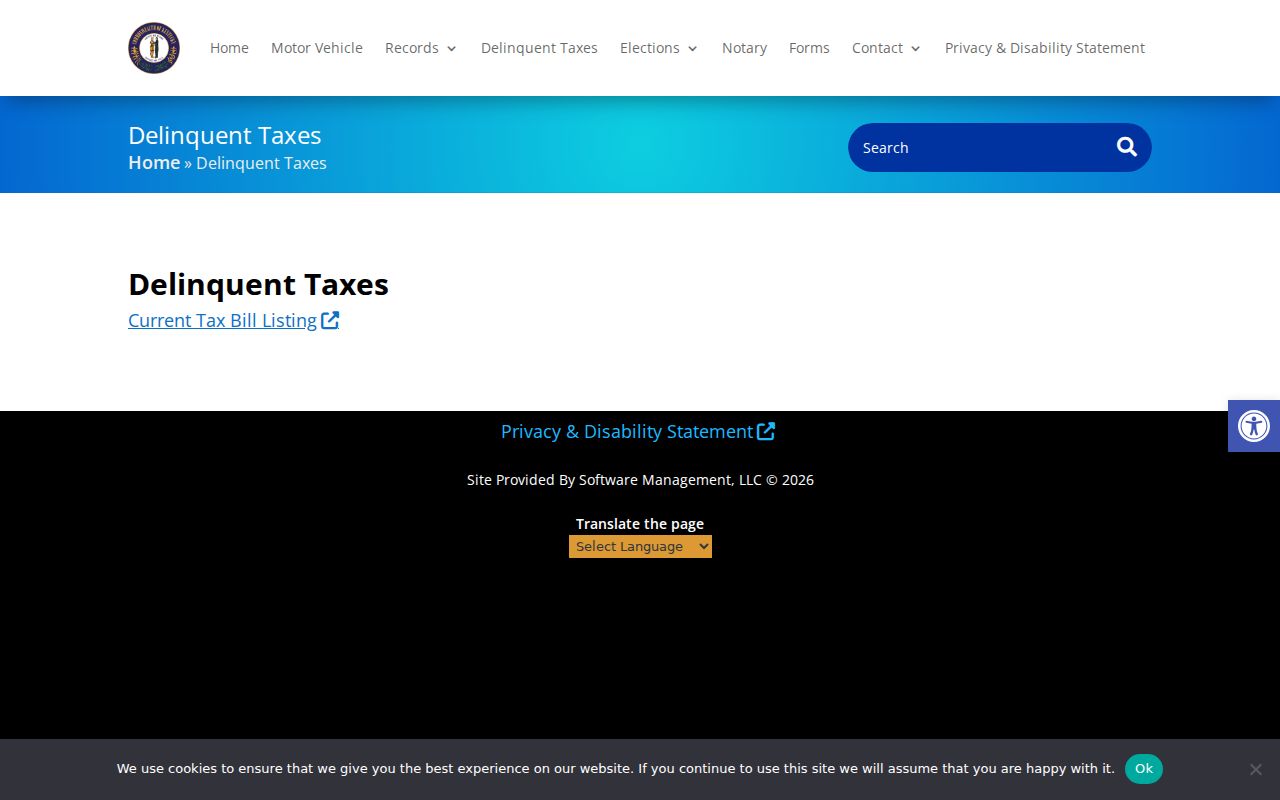
That page narrows down the list or sale material. Even so, the certificate, assignment, release and any later deed remain distinct documents that must each be traced separately.
A Delinquent Certificate Is Not a Graves County Deed
A certificate of delinquency is an unpaid tax obligation and a lien-based collection interest. It does not transfer ownership on the sale date. Ownership changes only through the later statutory and court process. An appropriate recorded instrument must back any change. A name may appear in tax-sale material but not on the PVA ownership line. This trips up searchers.
Start with the annual bill number and legal description. Locate the certificate next. Then search the Clerk's land index for an assignment, release, lis pendens or subsequent deed. A foreclosure or quiet-title matter may surface through the Graves Circuit Court Clerk. But a docket summary never replaces the recorded conveyance.
Tax-sale limit. A purchaser's certificate is a lien and collection claim, not instant ownership of the Graves County property.
Working Value and Certified Value Are Not Interchangeable
Graves qPublic reports show both a Working Value and a Certified Value heading. Keep both labels. Keep the roll year and parcel class as well. The certified value is the finished tax-roll figure. A working value can reflect assessment work still in progress, so collapsing the two numbers into one produces a false comparison across years.
The same parcel card may carry plat book and page, subdivision, lot, block, acreage, flood-hazard and zoning fields, plus building sketches. Those attributes help explain a valuation. They do not make the card a legal description. Rely on a recorded deed or plat instead.
Note: Save the value label and roll year with every figure so a working amount is never presented as certified.
Exemptions and Agricultural Classification Change Taxable Consequences
Kentucky Revenue's real-property assessment guide describes the homestead, disability, and agricultural assessment categories and points to Form 62A023. The PVA handles eligibility. It also takes the parcel application. A generic exemption description cannot show that relief appears on any particular Graves County property tax record. Read all three together. Exemption, class, and tax district sit beside the certified value on the record, and each one shapes the tax bill. Agricultural value is not a market haircut. An exemption changes what is taxable, but it never rewrites a deed or establishes who owns the property, so ask the PVA what documentation and current filing dates apply before relying on a statewide summary.
Contest a Graves County Assessment on the Kentucky Calendar
A Graves County appeal starts close to home. The first step is a conference with the local PVA. It is held during Kentucky's tax-roll inspection period. The state property-tax calendar fixes that sequence each year. Confirm the dates before you act. Evidence matters more than argument. Bring comparable sales, photographs, measurements, condition notes, surveys or estimates. Anything that shows the assessment misstates the property's characteristics or value belongs on the table.
What if the conference goes nowhere? The county Board of Assessment Appeals comes next. State notice Form 62D947 warns that the board filing can be due within one workday after the inspection period closes. Watch that deadline closely. Keep copies of everything and note when you delivered each item. Later review routes depend on the record you preserve at the conference and board stages. The official calendar below shows the statewide sequence that governs a Graves County challenge.
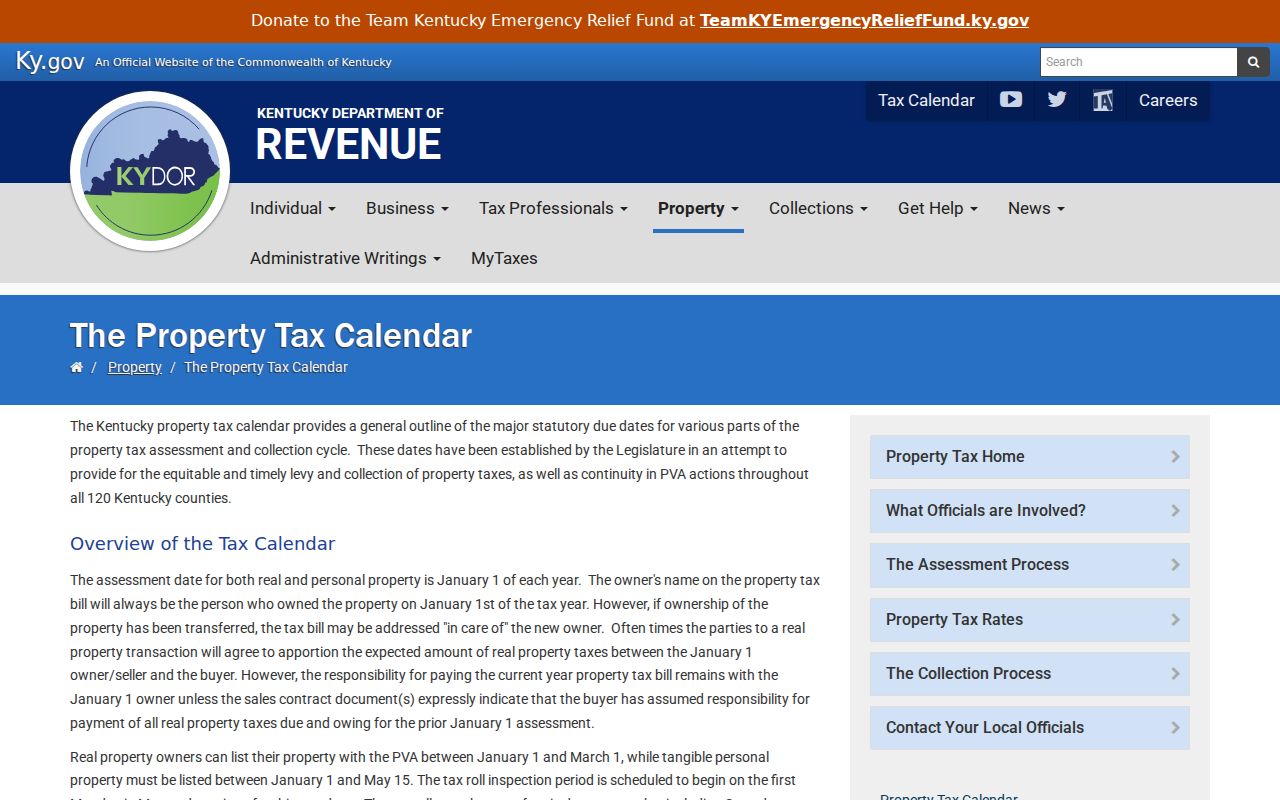
Check the page for the current year's dates before filing anything. The image helps with navigation but replaces neither the current notice nor its instructions.
Appeal window. Contact the PVA during the inspection period and verify the board deadline for the current year; the filing window can close one workday later.
When the Tax-Bill Mailing Address Lags
Tax-bill mailing addresses live with the PVA, according to the Sheriff. Changes made after June may not reach that year's printed bill. That Graves County quirk trips up plenty of owners. A stale mailing line does not mean the deed or the situs is wrong. Compare the owner of record, mailing address and location address as three separate facts.
Just bought the property? Check the latest recorded deed in the Clerk's ECCLIX index, then ask the PVA whether its mailing record has caught up. Keep proof of your request. Kentucky's Open Records Act, KRS 61.870-.884 provides a written inspection and copy route when a specific tax or assessment record cannot be pulled through the portal. Name the parcel, tax year and record you want. The custodian generally has five working days to grant access, explain a delay or cite an exemption.